1. Increased Molecular Motion: Elevated temperatures cause molecules to vibrate more vigorously.
2. Weakening of Non-Covalent Bonds: This increased motion disrupts the delicate network of hydrogen bonds, hydrophobic interactions, and van der Waals forces that hold the protein's three-dimensional structure together.
3. Unfolding of the Protein: As these non-covalent bonds weaken, the protein begins to unfold. Its alpha-helices and beta-sheets, which are responsible for the enzyme's specific shape, unravel.
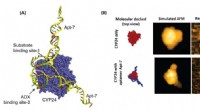
4. Loss of Active Site: The active site, the specific region on the enzyme where the substrate (in this case, catechol) binds, is often located within a specific pocket or groove formed by the folded protein. Denaturation disrupts this active site, rendering the enzyme unable to bind to the substrate.
5. Loss of Catalytic Activity: Since the active site is no longer functional, the enzyme can no longer catalyze the oxidation of catechol.
Consequences of Denaturation:
* Loss of Enzyme Function: The enzyme is no longer able to perform its biological role.
* Possible Aggregation: Denatured proteins can sometimes clump together, forming aggregates. These aggregates can be harmful to cells and tissues.
Reversibility:
In some cases, if the temperature is lowered slowly, the protein might refold back to its native structure and regain some activity. However, at higher temperatures, denaturation is often irreversible.
In summary, temperatures above 75°C disrupt the intricate structure of catechol oxidase, leading to its denaturation, loss of activity, and potentially irreversible damage.