1. Electron Ionization (EI):
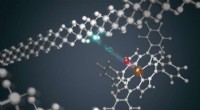
* How it works: A beam of high-energy electrons is fired at the sample. The electrons collide with the sample molecules, knocking off one or more electrons from the outer shell of the atoms. This results in the formation of positively charged ions.
* Advantages: EI is a relatively simple and robust method that produces a high yield of ions.
* Disadvantages: It can cause fragmentation of the molecules, leading to complex spectra that can be difficult to interpret.
2. Electrospray Ionization (ESI):
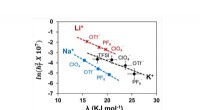
* How it works: The sample is dissolved in a solvent and passed through a capillary tube with a high voltage applied. This creates a fine mist of charged droplets. As the solvent evaporates, the droplets shrink and the ions are released into the gas phase.
* Advantages: ESI is a soft ionization technique that minimizes fragmentation, resulting in simpler spectra that are easier to interpret. It is particularly useful for analyzing large biomolecules.
* Disadvantages: It can be more sensitive to sample preparation and instrument parameters.
In both methods, the positively charged ions are then accelerated by an electric field and passed through a magnetic field. The magnetic field deflects the ions based on their mass-to-charge ratio, separating them according to their mass. This allows the mass spectrometer to identify and quantify the different ions present in the sample.
In summary:
* Electron ionization: Uses high-energy electrons to knock off electrons from the sample molecules.
* Electrospray ionization: Creates charged droplets that release ions into the gas phase.
Both methods result in the formation of positively charged ions that can be analyzed by the mass spectrometer.