Here's a breakdown:
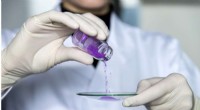
Acids: Acids are substances that release hydrogen ions (H+) when dissolved in water. They have a sour taste and can turn blue litmus paper red.
Bases: Bases are substances that release hydroxide ions (OH-) when dissolved in water. They have a bitter taste and can turn red litmus paper blue.
Neutralization Reaction:
When an acid reacts with a base, the hydrogen ions from the acid combine with the hydroxide ions from the base to form water (H2O). The remaining ions form a salt.
Example:
* HCl (hydrochloric acid) + NaOH (sodium hydroxide) → NaCl (sodium chloride) + H2O (water)
In this example, hydrochloric acid (HCl) reacts with sodium hydroxide (NaOH). The hydrogen ions (H+) from HCl combine with the hydroxide ions (OH-) from NaOH to form water (H2O). The remaining ions, sodium (Na+) and chloride (Cl-), form sodium chloride (NaCl), which is a salt.
Key Points:
* pH Scale: The pH scale measures the acidity or alkalinity of a solution. A neutral solution has a pH of 7. Acids have a pH less than 7, while bases have a pH greater than 7.
* Neutralization Results: Neutralization reactions produce a solution with a pH closer to 7, making it less acidic or basic.
* Applications: Neutralization reactions are used in many applications, including:
* Food production: Neutralizing excess acid in food products.
* Wastewater treatment: Neutralizing acidic or basic wastewater.
* Drug development: Neutralizing acidic or basic drugs to improve their stability and absorption.
Let me know if you'd like more details on any specific aspect of neutralization!