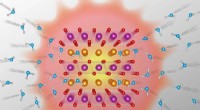
* They both represent the same element: Isotopes are variations of the same element. This means they have the same number of protons, which defines the element.
* They have the same chemical properties: The chemical behavior of an atom is largely determined by its electron configuration. Since isotopes have the same number of protons, they also have the same number of electrons, resulting in similar chemical reactivity.
Key Differences:
* Number of neutrons: Isotopes differ in their number of neutrons. This is what makes them "isotopes" – variations of the same element with different masses.
* Atomic mass: Because of the different neutron counts, isotopes have different atomic masses.
In Summary:
While isotopes are specific forms of an atom with varying neutron counts, they share the fundamental properties that define the element, like proton number and chemical behavior.