* Physical Changes: Involve alterations to a substance's physical properties (shape, size, state of matter) but not its chemical composition.
* Chemical Changes: Result in the formation of new substances with different chemical compositions.
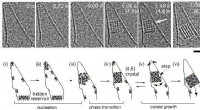
When a lake freezes, the water molecules (H₂O) simply change their arrangement:
* Liquid Water: Water molecules move freely and are relatively far apart.
* Ice: Water molecules become more ordered, forming a crystalline structure where they are closer together.
Key Points:
* No new substances are created: The chemical composition of water (H₂O) remains the same in both liquid and solid states.
* The change is reversible: When the temperature rises, the ice melts back into liquid water.
Therefore, the freezing of a lake is a physical change, not a chemical change.