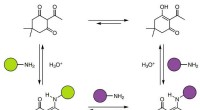
1. Reversible changes: These changes can be reversed, meaning the original substance can be recovered.
* Physical changes often involve reversible changes, like melting ice (solid to liquid) which can be reversed by freezing the water (liquid to solid).
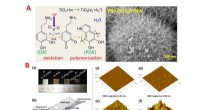
* Chemical changes can sometimes be reversed, but it often requires more complex processes. For example, the reaction of hydrogen and oxygen to form water is a chemical change, but water can be broken down into hydrogen and oxygen again through electrolysis (a chemical process).
2. Irreversible changes: These changes cannot be reversed, meaning the original substance cannot be recovered.
* Physical changes can sometimes be irreversible, like breaking a glass. Although the glass fragments are still glass, you can't put them back together to get the original shape.
* Chemical changes are often irreversible, like burning wood. The wood is transformed into ash, smoke, and gases, and you can't get the original wood back.
It's important to remember that there are many factors that influence whether a change is reversible or irreversible, such as the specific substances involved and the conditions of the change.