Here's a breakdown of what's happening:
* Hydrophobic: This term means "water-fearing." Hydrophobic regions of molecules are generally composed of non-polar groups, such as hydrocarbons. These regions are repelled by water.
* Why the repulsion? Water molecules are polar, meaning they have a slightly positive end and a slightly negative end. These polar molecules form strong hydrogen bonds with each other, creating a cohesive network. Non-polar molecules can't participate in hydrogen bonding, so they disrupt this network when they try to dissolve in water.
* The Result: The hydrophobic regions minimize their contact with water by clustering together. Think of oil droplets in water. They form spheres to minimize their surface area and contact with the water.
So, rather than "feeling," hydrophobic regions of molecules experience:
* Repulsion: From polar molecules like water.
* Attraction: To other non-polar molecules, leading to clustering.
* Minimization: Of their contact with water.
This behavior is crucial for many biological processes, including:
* Membrane formation: Cell membranes are made of phospholipids, which have both hydrophobic and hydrophilic regions. The hydrophobic tails cluster together, creating a barrier that separates the cell from its environment.
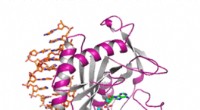
* Protein folding: The hydrophobic amino acids in a protein tend to fold inward, away from water, creating a stable core structure.
* Enzyme function: Some enzymes have hydrophobic pockets that bind to specific non-polar substrates.
In summary, hydrophobic regions of molecules don't "feel" in the traditional sense, but their interactions with water and other molecules are based on physical properties and lead to specific behaviors that are essential for life.