* Atoms are the fundamental building blocks of matter. They are the smallest unit of an element that retains the chemical properties of that element. While atoms can exist in isolation (like noble gases), they are usually found bonded together in molecules or larger structures.
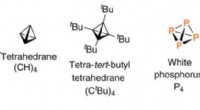
* Molecules are formed when two or more atoms bond together. These bonds can be ionic (transferring electrons) or covalent (sharing electrons). This bonding gives molecules unique properties that differ from the individual atoms that make them up.
Why do we think of molecules as existing independently?
* Stability: Molecules are often more stable than isolated atoms. The bonds between atoms lower their overall energy, making them less reactive.
* Observable properties: Molecules have distinct properties like melting point, boiling point, color, and reactivity. We can easily observe and study these properties, giving us a sense of their independent existence.
* Chemical reactions: Chemical reactions involve the breaking and forming of bonds between atoms, which ultimately results in the formation of new molecules.
Why don't atoms always exist independently?
* Reactivity: Most atoms are highly reactive, meaning they readily interact with other atoms to form more stable compounds.
* Octet rule: Many atoms strive to achieve a stable electron configuration (like noble gases) by gaining, losing, or sharing electrons. This often involves bonding with other atoms.
* Forces of attraction: Atoms are attracted to each other by various forces, including electrostatic and van der Waals forces. These forces often lead to the formation of molecules or larger structures.
In essence, both atoms and molecules exist in various states, depending on their environment and reactivity. While individual atoms can exist, they are often more stable and commonly found in the form of molecules or larger structures.