Here's a breakdown:
1. Light Absorption: Light energy is absorbed by chlorophyll molecules within PSII.
2. Electron Excitation: This energy excites electrons within the chlorophyll, causing them to jump to a higher energy level.
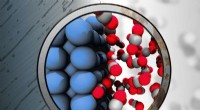
3. Water Splitting: To replace the lost electrons, water molecules are split into their constituent parts:
* Electrons: These electrons replace the ones lost by chlorophyll and continue the electron transport chain.
* Protons (H+): These protons are released into the thylakoid lumen, contributing to the proton gradient that drives ATP synthesis.
* Oxygen (O2): This is released as a byproduct and is what we breathe.
In summary: Water splitting occurs during the light-dependent reactions, specifically within PSII, as a consequence of light energy exciting electrons in chlorophyll molecules. This process is essential for providing electrons for the electron transport chain and generating oxygen as a byproduct.