1. Heat Transfer:
* Energy Input: When you heat water, you're adding energy to its molecules. This energy is transferred from the heat source (like a stovetop or fire) to the water molecules through conduction or convection.
2. Increased Molecular Motion:
* Vibrations: As the water molecules absorb energy, they start to vibrate and move faster.
* Space Between Molecules: The increased motion causes the molecules to spread apart, creating more space between them.
3. Reaching the Boiling Point:
* Vapor Pressure: The increased motion of water molecules also increases the pressure they exert on their surroundings. This is called vapor pressure.
* Atmospheric Pressure: At the same time, the air above the water exerts a pressure on the surface. This is atmospheric pressure.
* Boiling Point: When the vapor pressure of the water molecules becomes equal to the atmospheric pressure, the water starts to boil. The boiling point of water is 100°C (212°F) at standard atmospheric pressure.
4. Phase Change:
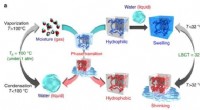
* Liquid to Gas: At the boiling point, the water molecules have enough energy to overcome the attractive forces holding them together in the liquid state. They break free from the surface and escape into the air as water vapor (gas).
* Bubbles: This escape is what we see as bubbles forming in boiling water. The bubbles are filled with water vapor.
5. Continued Heating:
* Evaporation: Even after reaching the boiling point, the water continues to absorb heat and evaporate. This process continues until all the liquid water has transformed into vapor.
Key Points:
* The boiling point of water can change depending on the atmospheric pressure. At higher altitudes, where the atmospheric pressure is lower, water boils at a lower temperature.
* Boiling is a physical change, not a chemical change. The water molecules are still H₂O, but their state has changed from liquid to gas.
Let me know if you have any other questions!