Here's a breakdown of the key historical milestones:
Ancient Times:
* Early civilizations: Basic techniques like distillation, fermentation, and evaporation were employed for food preservation, medicine, and other processes.
* Ancient Egypt: Used rudimentary vessels and tools for chemical processes like dyeing, perfume making, and metalworking.
* Ancient Greece and Rome: Developed more advanced techniques like pottery, glassblowing, and metallurgy, laying the foundation for later advancements.
Medieval and Renaissance Era:
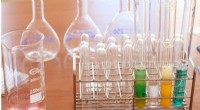
* Alchemists: While often associated with mystical pursuits, alchemists made significant contributions to understanding chemical reactions and developing laboratory equipment.
* 16th and 17th centuries: The rise of scientific experimentation led to the invention of key apparatus like the barometer, thermometer, and air pump, setting the stage for modern chemical engineering.
Industrial Revolution and Beyond:
* 18th and 19th centuries: The Industrial Revolution saw the mass production of chemicals, leading to the development of specialized equipment like reactors, distillation columns, and filters.
* 20th and 21st centuries: Continued advancements in chemical engineering, materials science, and automation have led to increasingly sophisticated and efficient chemical process equipment.
Key Figures:
While attributing specific inventions is challenging, some notable figures played a significant role in the development of chemical process equipment:
* Robert Boyle: Contributed significantly to the development of scientific methods and equipment, including the vacuum pump.
* Antoine Lavoisier: Revolutionized chemistry with his work on combustion and the law of conservation of mass.
* Humphry Davy: Developed the safety lamp for miners and made key discoveries in electrochemistry.
* Carl von Linde: Developed the first large-scale process for liquefying air, leading to advancements in cryogenics and chemical separation.
It's important to remember that the development of chemical process equipment is a continuous process of innovation and refinement, driven by the collective efforts of scientists, engineers, and technicians throughout history.