1. Polarity:
* Water (H₂O): Water molecules are polar. The oxygen atom is more electronegative than the hydrogen atoms, creating a partial negative charge on the oxygen and partial positive charges on the hydrogens. This forms a dipole moment, making water a polar molecule.
* Non-polar molecules: Non-polar molecules have an even distribution of electrons, resulting in no significant charge separation and no dipole moment.
2. Intermolecular Forces:
* Water: Water molecules form strong hydrogen bonds with each other due to their polarity. These hydrogen bonds are responsible for water's high boiling point and surface tension.
* Non-polar molecules: Non-polar molecules primarily experience weak London dispersion forces, which are temporary, fleeting interactions due to temporary fluctuations in electron distribution.
3. Hydrophobic Effect:
* Water's preference for itself: Water molecules strongly interact with each other via hydrogen bonds, forming a highly cohesive network. They prefer to associate with other water molecules rather than with non-polar molecules.
* Exclusion of non-polar molecules: When non-polar molecules are introduced into water, they disrupt the hydrogen bonding network. To minimize this disruption, water molecules "push" the non-polar molecules away, forming separate clusters or aggregates. This phenomenon is known as the hydrophobic effect.
In essence, the strong hydrogen bonding network in water makes it energetically unfavorable for non-polar molecules to dissolve in it. They are repelled due to the disruption they cause to the water's cohesive structure.
Consequences:
* Oil and water: Oil is a non-polar substance and therefore doesn't mix with water.
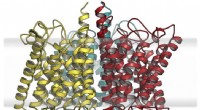
* Cell membranes: Cell membranes are composed of phospholipid bilayers, with hydrophobic tails facing inward and hydrophilic heads facing outward. This structure creates a barrier that prevents water-soluble molecules from easily entering the cell.
* Protein folding: The hydrophobic effect plays a crucial role in protein folding, driving non-polar amino acids to the interior of the protein, while polar amino acids are exposed to the aqueous environment.