* The Water Environment: Proteins exist in the aqueous environment of the cell. Water molecules are polar, forming hydrogen bonds with each other. Non-polar molecules, like hydrocarbons, disrupt these hydrogen bonds, making them unfavorable in an aqueous environment.
* Minimizing Disruption: To minimize this disruption, non-polar molecules tend to cluster together, pushing water molecules away. This is known as the hydrophobic effect.
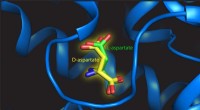
* Binding Sites: Proteins often have pockets or clefts called binding sites that are designed to accommodate small molecules. These binding sites are often lined with non-polar amino acids (like valine, leucine, isoleucine, phenylalanine). This hydrophobic environment within the binding site favors the interaction with non-polar small molecules.
* Favorable Interactions: While hydrophobic interactions are not as strong as ionic bonds or hydrogen bonds, they contribute significantly to binding stability. The hydrophobic effect contributes to the overall free energy change of the binding process, making the interaction favorable.
Other Factors:
* Shape Complementarity: The shape of the small molecule and the binding site must be complementary for successful binding.
* Electrostatic Interactions: While less dominant than hydrophobic interactions, electrostatic interactions (ionic bonds, hydrogen bonds) also play a role, particularly in the formation of the initial interaction and fine-tuning of the complex.
* Van der Waals Forces: These weak, short-range forces contribute to the overall stability of the interaction.
In summary:
Hydrophobic interactions are crucial in small molecule-protein interactions because they drive the association of non-polar molecules within the protein's hydrophobic binding sites, leading to favorable binding and a stable complex. While other interactions contribute, hydrophobic interactions are often dominant due to the aqueous environment in which proteins function.