1. Identify the reactants and their ionic forms:
* Write out the chemical formulas for the reactants.
* Break down each reactant into its constituent ions, considering their charges. For example, NaCl breaks down into Na⁺ and Cl⁻ ions.
2. Predict the possible products:
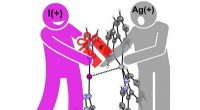
* Swap the cations and anions of the reactants. This is based on the idea that in a double displacement reaction, the positive ions (cations) switch partners.
3. Determine the solubility of the potential products:
* Consult a solubility table: These tables indicate whether a compound is soluble, slightly soluble, or insoluble in water.
* General solubility rules: You can also use general solubility rules as a guideline:
* Most alkali metal salts (Li⁺, Na⁺, K⁺, Rb⁺, Cs⁺) are soluble.
* Most nitrate (NO₃⁻) salts are soluble.
* Most chloride (Cl⁻), bromide (Br⁻), and iodide (I⁻) salts are soluble, except for those with Ag⁺, Pb²⁺, and Hg₂²⁺.
* Most sulfate (SO₄²⁻) salts are soluble, except for those with Ba²⁺, Sr²⁺, Ca²⁺, Pb²⁺, and Hg₂²⁺.
* Most carbonate (CO₃²⁻) and phosphate (PO₄³⁻) salts are insoluble, except for those with alkali metals and ammonium (NH₄⁺).
* Most hydroxide (OH⁻) salts are insoluble, except for those with alkali metals and Ca²⁺, Sr²⁺, and Ba²⁺.
4. Identify the precipitate:
* The product that is insoluble in water is the precipitate. It will form a solid that settles out of the solution.
Example:
Let's say you are reacting aqueous solutions of silver nitrate (AgNO₃) and sodium chloride (NaCl).
1. Reactants and ions:
* AgNO₃ → Ag⁺ + NO₃⁻
* NaCl → Na⁺ + Cl⁻
2. Possible products:
* Ag⁺ + Cl⁻ → AgCl (silver chloride)
* Na⁺ + NO₃⁻ → NaNO₃ (sodium nitrate)
3. Solubility:
* AgCl is insoluble in water (according to the solubility rules).
* NaNO₃ is soluble in water.
4. Precipitate:
* AgCl is the precipitate.
Therefore, in the reaction between silver nitrate and sodium chloride, the precipitate formed is silver chloride (AgCl).