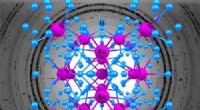
* Ionic bonds form between oppositely charged ions. Cations are positively charged ions, while anions are negatively charged ions. The electrostatic attraction between these opposite charges is what holds ionic compounds together.
* Like charges repel. If you tried to bond two cations or two anions together, their positive or negative charges would repel each other, preventing a stable bond from forming.
Instead of cation-cation or anion-anion bonds, ionic compounds form by the following:
* Transfer of electrons: A metal atom loses electrons to become a cation, while a nonmetal atom gains electrons to become an anion. This creates the opposite charges that attract each other, forming the ionic bond.
Examples:
* Sodium chloride (NaCl): Sodium (Na) loses an electron to become Na+, while chlorine (Cl) gains an electron to become Cl-. The resulting oppositely charged ions attract each other to form the ionic compound NaCl.
* Magnesium oxide (MgO): Magnesium (Mg) loses two electrons to become Mg2+, while oxygen (O) gains two electrons to become O2-. The resulting attraction forms the ionic compound MgO.
Let me know if you have any other questions!