The Phospholipid Bilayer:
* Nonpolar Middle: The middle portion of the phospholipid bilayer is made up of the fatty acid tails of the phospholipids. These tails are long chains of hydrocarbons (carbon and hydrogen), which are nonpolar. This makes the middle of the membrane hydrophobic (water-fearing).
* Polar Heads: The phospholipid heads contain a phosphate group and are polar. They are hydrophilic (water-loving) and face the watery environments inside and outside the cell.
Polar Molecules and Charged Molecules:
* Polar Molecules: Polar molecules have an uneven distribution of charge, creating partial positive and negative areas. Examples include water (H₂O), sugars, and amino acids.
* Charged Molecules: Charged molecules have a full positive or negative charge. Examples include ions like sodium (Na⁺) and chloride (Cl⁻).
Crossing the Membrane:
* Difficulty: Polar and charged molecules have difficulty passing through the nonpolar middle of the membrane. The hydrophobic environment repels them.
* Solutions:
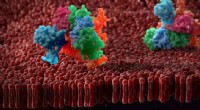
* Protein Channels: Many polar and charged molecules can cross the membrane with the help of specialized proteins called transport proteins. These proteins create channels or pathways for specific molecules to pass through.
* Passive Diffusion: Some small, uncharged polar molecules like water can pass through the membrane by a process called simple diffusion, but this is slow.
Summary:
* Nonpolar molecules: Can pass through the membrane easily because they are attracted to the nonpolar tails.
* Polar and charged molecules: Have difficulty passing through the nonpolar middle of the membrane. They require transport proteins or specialized mechanisms to cross.
Let me know if you'd like more detail on any of these points!