Here's a breakdown:
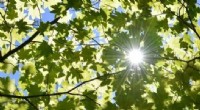
* Stomata (singular: stoma) are tiny pores or openings on the surface of leaves, primarily on the underside.
* They are surrounded by two specialized guard cells that control the opening and closing of the stomata.
* Guard cells are bean-shaped cells that change shape in response to environmental factors like light intensity, humidity, and carbon dioxide levels.
* When guard cells swell with water, they become turgid and open the stomata, allowing for gas exchange.
* When they lose water and become flaccid, they close the stomata, preventing water loss.
Gas exchange through stomata:
* Carbon dioxide (CO2) enters the leaf through the stomata for photosynthesis.
* Oxygen (O2) produced during photosynthesis exits the leaf through the stomata.
* Water vapor (H2O) also exits the leaf through the stomata, a process known as transpiration.
In summary, stomata are crucial for the survival of plants, enabling them to take in the necessary gases for photosynthesis and release waste products while also regulating water loss.