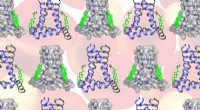
* Vibrating: The atoms within a molecule are constantly vibrating, like tiny springs. They stretch, compress, and bend relative to each other.
* Rotating: Molecules can spin around their axes, like tops. This rotational motion is influenced by the molecule's shape and the environment.
* Translating: Molecules move from place to place, a motion known as translation. This can be simple movement in a straight line or more complex, chaotic movement in a liquid or gas.
The degree and type of motion depends on:
* Temperature: Higher temperatures mean more energy, leading to faster vibrations, rotations, and translations.
* State of matter: Molecules in solids are held more tightly together and move less than molecules in liquids or gases.
* Intermolecular forces: The forces of attraction between molecules influence how they move and interact with each other.
This constant motion of molecules is fundamental to many phenomena we observe:
* Diffusion: Molecules spreading out from areas of high concentration to areas of low concentration.
* Gas pressure: The pressure exerted by a gas is caused by molecules colliding with the walls of their container.
* Chemical reactions: Molecules must collide with sufficient energy to break and form new bonds, leading to chemical changes.
So, while molecules may appear static, they are always busy, dancing a complex dance of vibrations, rotations, and translations that drive the world around us!