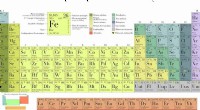
* The atom's electron configuration: The number of valence electrons (electrons in the outermost shell) determines how many electrons an atom can readily lose. Atoms with a smaller number of valence electrons (like alkali metals with one valence electron) tend to be more likely to donate electrons.
* The electronegativity of the atom: Electronegativity is a measure of an atom's tendency to attract electrons. Atoms with lower electronegativity are more likely to donate electrons.
* The surrounding environment: Factors like the presence of other atoms or molecules can influence an atom's tendency to donate electrons.
Here's why there's no fixed maximum:
* Ionization energies: Removing electrons from an atom requires energy, called ionization energy. Each successive ionization requires more energy. While an atom can potentially lose multiple electrons, it becomes increasingly difficult and energetically unfavorable to remove more electrons.
* Stability: Atoms tend to donate electrons to achieve a stable electron configuration, often resembling a noble gas. While some atoms can lose multiple electrons, they won't lose more than necessary to reach this stable state.
Examples:
* Alkali metals (Li, Na, K, etc.): They donate one electron to become cations with a +1 charge.
* Alkaline earth metals (Be, Mg, Ca, etc.): They can donate two electrons to form cations with a +2 charge.
* Transition metals: They can donate varying numbers of electrons depending on the specific element and the conditions, often forming cations with multiple possible charges.
In summary:
An atom can donate a number of electrons determined by its specific electron configuration, electronegativity, and the surrounding environment. There's no strict maximum because the ability to donate electrons depends on the energy requirements and the stability of the resulting ions.