1. Seismic Wave Behavior:
* P-waves (Primary waves): These are compressional waves that travel through solids and liquids. They are able to pass through the outer core but their speed slows down significantly, indicating a change in material properties.
* S-waves (Secondary waves): These are shear waves that can only travel through solids. S-waves cannot travel through the outer core, providing strong evidence that it is liquid.
2. Earth's Magnetic Field:
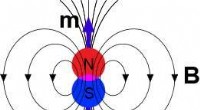
* The Earth's magnetic field is generated by the movement of electrically conductive material within the Earth's core. This movement requires a fluid medium like liquid iron, which can flow and generate currents.
* The magnetic field also exhibits fluctuations and changes in intensity over time, indicating a dynamic, fluid core.
3. Meteorite Analysis:
* Meteorites from other celestial bodies provide insights into the Earth's composition. Iron-nickel meteorites, similar to the presumed composition of the Earth's core, are primarily found in a liquid state.
4. Laboratory Experiments:
* High-pressure experiments on iron and other core materials have been conducted to simulate the conditions in the Earth's core. These experiments have shown that iron becomes liquid at the temperatures and pressures found in the outer core.
5. Earth's Rotation and Shape:
* The Earth's rotation and slightly oblate shape are also consistent with a fluid outer core. The fluidity of the core allows it to deform and contribute to the Earth's rotation.
In summary, the evidence from seismic wave behavior, Earth's magnetic field, meteorite analysis, laboratory experiments, and Earth's shape and rotation all strongly suggest that the Earth's outer core is liquid.