Common Gases:
* Neon: Red-orange
* Argon: Blue-violet
* Helium: Pale pink to yellowish-white
* Krypton: White to yellowish-white
* Xenon: Blue-white
* Nitrogen: Pinkish-red
* Oxygen: Pale blue-white
* Hydrogen: Pale pink to lavender
Other Gases:
* Mercury vapor: Blue-green
* Sodium vapor: Yellow-orange
* Carbon dioxide: Pale blue-white
How it Works:
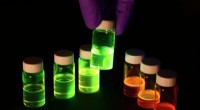
When an electric current passes through a gas, it excites the atoms of the gas. These excited atoms then release energy in the form of light. The specific color of light emitted depends on the energy levels of the excited atoms.
Applications:
* Neon signs: The iconic neon signs use gas discharge to create colorful displays.
* Fluorescent lights: These lights use mercury vapor to emit ultraviolet light, which then excites a phosphor coating on the inside of the tube to produce visible light.
* Spectroscopy: Scientists use gas discharge to study the composition of materials and analyze their chemical makeup.
It's important to note that the colors emitted can vary slightly depending on the pressure and current applied. Additionally, mixtures of gases can create different colors.