* Protection: Just as the security gate controls access to the factory and protects the machinery and processes inside, the nuclear envelope safeguards the cell's genetic material (DNA) housed within the nucleus. It acts as a barrier, regulating what goes in and out.
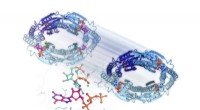
* Control: The security gate ensures only authorized personnel and materials enter the factory. Similarly, the nuclear envelope has pores that selectively allow specific molecules, like proteins and RNA, to pass through, while preventing others from entering the nucleus.
* Organization: The security gate helps organize the factory's operations by separating the manufacturing area from the outside world. The nuclear envelope defines the nucleus, separating the DNA from the rest of the cell's cytoplasm and creating a dedicated space for genetic processes.
Additionally:
* The nuclear envelope is not a rigid barrier like a fence, but rather a dynamic structure with pores that can change size and shape. This allows for the passage of molecules while maintaining the nucleus's integrity.
* The factory analogy isn't perfect. The nuclear envelope is far more complex than a simple fence, with many important functions in regulating cell activity and communication.
Overall, comparing the nuclear envelope to a factory's security gate highlights its role as a protective barrier and control point, crucial for the proper functioning of the cell.