Here's how it works:
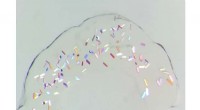
1. Stomata: Plants have tiny pores on their leaves called stomata. These stomata open and close to regulate gas exchange.
2. Diffusion: When the stomata are open, carbon dioxide from the surrounding air diffuses into the leaves. This diffusion happens because the concentration of carbon dioxide is generally higher outside the leaf than inside.
3. Dark Reaction: The carbon dioxide enters the plant cells and is used in the Calvin cycle, which is the dark reaction of photosynthesis. This process uses the energy stored in ATP and NADPH (produced during the light reaction) to convert carbon dioxide into sugar.
So, while the light reaction requires sunlight, the dark reaction relies on carbon dioxide that the plant absorbs from the atmosphere.