1. KBr Pellets:
* Sample Preparation: Most organic and inorganic compounds are not transparent to IR radiation in their solid form. To overcome this, a technique called KBr pellet pressing is employed.
* Procedure:
* A small amount of the sample (typically 1-2 mg) is finely ground with about 100-200 mg of dry, finely powdered KBr.
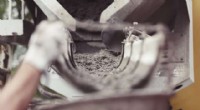
* The mixture is then placed in a die and pressed under high pressure (typically 10 tons) to form a transparent pellet.
* The resulting pellet is then placed in the IR beam path for analysis.
* Why KBr?
* Transparency: KBr is transparent in the IR region of the electromagnetic spectrum, allowing the IR beam to pass through it unimpeded.
* Non-reactive: KBr is chemically inert and does not react with most organic or inorganic compounds, ensuring that the spectrum obtained is solely from the sample.
* Easy to Handle: KBr is easily available, relatively inexpensive, and readily forms a solid pellet.
2. Other Applications:
* IR Microscope: KBr can be used to create micro-pellets for analysis with an IR microscope, allowing for the study of smaller samples and inhomogeneous materials.
* Liquid Samples: KBr can be used as a solvent for liquids that are not suitable for direct analysis in the IR spectrometer. However, this method is less common than pellet pressing.
Advantages of using KBr:
* Versatile: KBr can be used for a wide variety of samples, including solids, liquids, and gases.
* Reliable: The technique is relatively reliable and produces reproducible spectra.
* Simple: KBr pellet pressing is a relatively simple and straightforward technique.
Disadvantages of using KBr:
* Hygroscopic: KBr is hygroscopic, meaning it readily absorbs moisture from the air. This can lead to the formation of water bands in the IR spectrum, interfering with the analysis of the sample.
* Potential for interference: Although KBr is generally non-reactive, there are some compounds that can react with KBr, leading to unwanted spectral features.
* Limited spectral range: KBr has a limited spectral range, and it cannot be used to study samples that absorb strongly in the far-IR region.
Alternatives to KBr:
* Other Alkali Halides: Other alkali halides like NaCl, KCl, and CsI can be used in place of KBr for different spectral regions.
* Attenuated Total Reflectance (ATR): ATR is a technique that does not require sample preparation and eliminates the need for KBr pellets.
In summary, KBr plays a vital role in IR spectroscopy by enabling the analysis of solid samples through pellet pressing. The technique is widely used and offers advantages in terms of versatility, reliability, and simplicity. However, it's essential to be aware of potential drawbacks like hygroscopicity and possible spectral interference, as well as alternative methods that may be suitable for certain applications.