Here's the breakdown:
* Bond Strength: The strength of the chemical bond between atoms in a mineral determines how strongly the atoms are held together. Stronger bonds require more energy to break.
* Mineral Hardness: Hardness refers to a mineral's resistance to scratching or abrasion. This resistance is directly tied to the strength of the bonds holding the mineral's atoms together.
Here's how it works:
* Stronger Bonds = Greater Hardness: Minerals with stronger bonds, such as covalent bonds or metallic bonds, are harder to scratch because it takes more energy to break the bonds between the atoms. Examples include diamond (covalent) and corundum (covalent).
* Weaker Bonds = Lower Hardness: Minerals with weaker bonds, such as ionic bonds or van der Waals forces, are easier to scratch because less energy is needed to break the bonds. Examples include talc (ionic) and graphite (van der Waals).
Example:
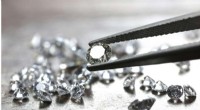
* Diamond is the hardest known natural mineral because it has a strong covalent network structure with exceptionally strong bonds between carbon atoms.
* Talc, on the other hand, is the softest mineral because it has weak ionic bonds between its atoms.
In summary: The strength of the bonds between atoms in a mineral directly influences its resistance to scratching, making bond strength a fundamental factor determining mineral hardness.