Molecular addition compounds are formed when two or more molecules combine to form a single new molecule without any loss of atoms. The new molecule has a different structure and properties compared to the original molecules.
Here's a breakdown of their key features:
Formation:
* No chemical reaction: No bonds are broken or formed between the constituent molecules. Instead, they combine through weak intermolecular forces, such as hydrogen bonding, dipole-dipole interactions, or London dispersion forces.
* No atom loss: The original atoms of the constituent molecules are all present in the new compound.
Properties:
* New structure: The arrangement of atoms in the new molecule differs from the original molecules.
* New properties: The addition compound often exhibits different physical and chemical properties compared to its constituent molecules. For example, it might have a different melting point, boiling point, or solubility.
* Often dissociate: The weak interactions holding the addition compound together can be easily disrupted, leading to dissociation into the original molecules under suitable conditions (e.g., heating, dissolving in a solvent).
Examples:
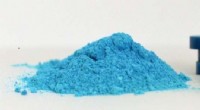
* Hydrates: When water molecules attach to a salt, forming a new compound like copper(II) sulfate pentahydrate (CuSO₄·5H₂O).
* Clathrates: Compounds where one molecule is trapped inside a cage formed by another molecule, like the clathrate hydrates formed by methane trapped in water molecules.
* Charge-transfer complexes: Compounds formed by electron transfer between two molecules, like the complex formed by iodine and benzene.
Distinguishing from other compounds:
* Molecular addition compounds are distinct from coordination compounds, which involve the formation of coordinate covalent bonds between a metal ion and ligands.
* Molecular addition compounds are also different from adducts, which are formed when two molecules react to form a new compound with covalent bonds between the constituent molecules.
In Summary:
Molecular addition compounds are formed by the combination of molecules through weak intermolecular forces, resulting in a new molecule with distinct properties. They are often readily dissociated back into their original components.