Here's why:
* Specificity: Enzymes are highly specific. Their active site is like a lock that only fits a specific key (the substrate). This allows for precise control of biochemical reactions in the cell.
* Binding: The substrate binds to the active site of the enzyme through non-covalent interactions, forming an enzyme-substrate complex.
* Catalysis: The enzyme facilitates the chemical reaction by lowering the activation energy, converting the substrate into a product.
* Release: Once the reaction is complete, the product is released from the active site, and the enzyme is free to bind another substrate molecule.
While an enzyme may be able to react with multiple molecules of the same substrate simultaneously, it cannot react with different substrate molecules at the same time.
However, there are some exceptions to this rule:
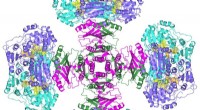
* Multi-enzyme complexes: Some enzymes work together in complexes, with one enzyme's product serving as the substrate for the next enzyme. This allows for a series of reactions to occur in a coordinated fashion.
* Multi-substrate enzymes: Some enzymes require multiple substrates to bind before they can catalyze a reaction. These enzymes often have multiple active sites, each specific for a different substrate.
Overall, enzymes are highly specific catalysts that typically react with only one substrate at a time. This specificity is crucial for maintaining the proper functioning of biological processes.