Adding salt to water lowers its freezing point. This is called freezing point depression and is a colligative property, meaning it depends on the number of solute particles present in the solution, not on their specific identity.
Here's why:
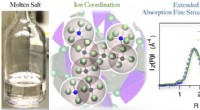
* Disruption of Water Molecule Bonding: Water molecules form strong hydrogen bonds that hold them together in a crystalline structure when they freeze. Salt ions (Na+ and Cl-) disrupt these bonds by attracting water molecules, making it harder for them to form the regular ice lattice.
* Increased Entropy: The salt ions also increase the entropy (disorder) of the solution, making it more difficult for water molecules to align into a regular ice structure.
Procedure for Experimenting with Freezing Point Depression:
Materials:
* 2 Identical containers (e.g., beakers or jars)
* Distilled water
* Table salt
* Thermometer
* Ice
* Stirring rod
* Graduated cylinder or measuring cups
Procedure:
1. Label your containers: Label one container "Saltwater" and the other "Freshwater."
2. Prepare your solutions:
* In the "Freshwater" container, pour approximately 100 ml of distilled water.
* In the "Saltwater" container, pour approximately 100 ml of distilled water. Then add 1-2 tablespoons of salt and stir until dissolved.
3. Place the containers in the freezer: Place both containers in the freezer simultaneously.
4. Monitor the freezing point:
* Use the thermometer to check the temperature of both containers every 15 minutes. Note the temperature at which each solution starts to freeze (when ice crystals start to form).
* Continue monitoring until both solutions are completely frozen.
5. Record observations: Record the starting freezing point of each solution.
Analysis:
* Compare the freezing points of the two solutions. You should observe that the "Saltwater" solution has a lower freezing point than the "Freshwater" solution.
* Repeat the experiment with different salt concentrations to investigate the relationship between salt concentration and freezing point depression.
Safety Precautions:
* Always wear safety goggles when working with chemicals.
* Be careful when handling hot or cold containers.
* Use distilled water to ensure accurate results.
Further Exploration:
* Investigate the effect of different types of salts on the freezing point depression.
* Explore the application of freezing point depression in real-life scenarios like winter road safety or food preservation.
Note: This experiment is a simple demonstration of the freezing point depression phenomenon. For more precise measurements, you may need to use specialized equipment and procedures.