Dehydration Synthesis
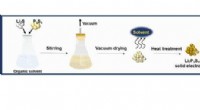
* What it is: Dehydration synthesis is a chemical reaction where a water molecule (H₂O) is removed from two smaller molecules, joining them together to form a larger molecule. It's like building a chain with links, and each link requires the removal of a water molecule.
* The Bond: The bond formed in dehydration synthesis is called a covalent bond, specifically a covalent bond with a water molecule removed. This is sometimes referred to as a glycosidic bond in carbohydrates, a peptide bond in proteins, and a phosphodiester bond in nucleic acids, depending on the molecules involved.
Breaking the Bond: Hydrolysis
* The Opposite: To break apart a bond formed by dehydration synthesis, we use the opposite process: hydrolysis.
* Adding Water: Hydrolysis means "splitting with water." In this process, a water molecule is added to the larger molecule, breaking the covalent bond and separating it into two smaller molecules. Think of it as breaking the chain by inserting a water molecule between the links.
Example: Carbohydrates
* Dehydration Synthesis: Two simple sugars (monosaccharides) like glucose and fructose can combine through dehydration synthesis to form a disaccharide called sucrose. A water molecule is removed in the process.
* Hydrolysis: To break sucrose back into glucose and fructose, you add a water molecule to the sucrose molecule, breaking the glycosidic bond.
Key Takeaway: Dehydration synthesis removes water to form a covalent bond, while hydrolysis adds water to break that bond. This is a fundamental process in biochemistry and is essential for building and breaking down complex biological molecules.