* Infrared radiation: IR radiation is a type of electromagnetic radiation with wavelengths longer than visible light, but shorter than microwaves.
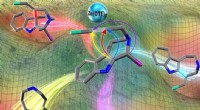
* Molecular vibrations: Molecules are not static; their atoms are constantly vibrating. These vibrations can be stretching, bending, or rocking motions.
* Energy absorption: When a molecule absorbs IR radiation, it promotes the vibrational energy levels of its bonds. The specific frequencies of IR radiation that are absorbed depend on the types of bonds present in the molecule and their vibrational modes.
* Unique fingerprint: Each molecule has a unique set of vibrational modes, leading to a characteristic IR spectrum. This spectrum serves as a "fingerprint" for identifying and analyzing different compounds.
In short, IR spectroscopy uses the absorption of specific frequencies of infrared radiation to identify and study the functional groups and overall structure of molecules.