Thermodynamics:
* First Law of Thermodynamics: Energy is conserved. It can be transferred or transformed, but not created or destroyed.
* Second Law of Thermodynamics: In an isolated system, entropy always increases. Entropy is a measure of disorder or randomness.
* Third Law of Thermodynamics: The entropy of a perfect crystal at absolute zero is zero.
Equilibrium:
* Equilibrium is a state where the system is at its most stable and unchanging.
* It represents a balance between competing forces or tendencies within the system.
* This balance results in a state of minimum potential energy and maximum entropy.
Examples:
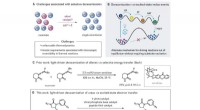
* Chemical Equilibrium: Consider a reversible reaction where reactants are constantly converting into products and vice versa. At equilibrium, the rates of the forward and reverse reactions are equal, leading to a constant ratio of reactants and products.
* Thermal Equilibrium: Two objects at different temperatures will exchange heat until they reach the same temperature, at which point they are in thermal equilibrium.
* Mechanical Equilibrium: A body is in mechanical equilibrium when all forces acting on it are balanced. It is neither accelerating nor decelerating.
Key Points:
* Equilibrium is a dynamic process: Even though a system appears static at equilibrium, it's important to remember that there are still processes happening at the molecular level.
* Equilibrium is a tendency: Systems naturally move towards equilibrium, but they may not always reach it completely.
* Equilibrium is influenced by external factors: Factors like temperature, pressure, and concentration can affect the equilibrium state of a system.
In summary, equilibrium arises from the fundamental laws of physics and reflects the system's tendency to minimize energy and maximize entropy. It's a state of balance and stability where competing forces are equal, resulting in a stable, unchanging state.