1. Light Absorption:
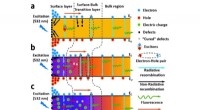
* Chloroplasts contain chlorophyll, a green pigment that absorbs light energy, primarily in the red and blue wavelengths.
* This absorbed light energy is used to power the chemical reactions of photosynthesis.
2. Light-Dependent Reactions:
* Within the chloroplast's thylakoid membranes, the light-dependent reactions occur.
* These reactions use light energy to:
* Split water molecules, releasing oxygen as a byproduct.
* Generate ATP (adenosine triphosphate), the cell's primary energy currency.
* Produce NADPH (nicotinamide adenine dinucleotide phosphate), a high-energy electron carrier.
3. Calvin Cycle (Light-Independent Reactions):
* The Calvin cycle takes place in the chloroplast's stroma (the fluid-filled space surrounding the thylakoids).
* It uses the ATP and NADPH produced in the light-dependent reactions to convert carbon dioxide from the atmosphere into glucose (sugar).
* This process is also known as carbon fixation.
In summary, the chloroplast is a vital organelle for photosynthesis, performing the following functions:
* Capturing light energy.
* Converting light energy into chemical energy (ATP and NADPH).
* Using this energy to fix carbon dioxide and produce glucose.
Without chloroplasts, plants would be unable to photosynthesize, and the world would be a very different place.