* Phosphate is a weak base: It has a slight tendency to accept a proton (H⁺) from water, but this reaction is very limited. The equilibrium lies heavily towards the unreacted phosphate and water.
* Hydrolysis is minimal: The reaction of phosphate with water to form phosphoric acid (H₃PO₄) and hydroxide ions (OH⁻) is also very minimal.
* Solubility: Phosphate salts are generally soluble in water, meaning they dissolve readily, but they don't react chemically in a major way with the water molecules themselves.
What actually happens:
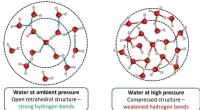
When phosphate dissolves in water, it forms hydrated ions. This means water molecules surround the phosphate ion, forming a hydration sphere. These hydration spheres help stabilize the phosphate ion in solution.
However:
If you add a strong acid to a solution containing phosphate ions, the acid will donate protons to the phosphate ions, shifting the equilibrium towards the formation of phosphoric acid. This is an example of a reaction that can occur with phosphate and water, but it's not a direct reaction between phosphate and water itself.
In summary:
Phosphate ions don't react significantly with water on their own. They dissolve and become hydrated, but the primary interaction is physical rather than chemical. If you add a strong acid, you can induce a reaction with the water molecules to form phosphoric acid.