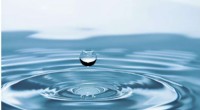
* States of Matter: All matter exists in three primary states: solid, liquid, and gas. Water is no exception.
* Phase Transitions: The transitions between these states (melting, freezing, boiling, condensation, sublimation, deposition) are driven by changes in temperature and pressure. These transitions are also observed in most substances.
* Energy Changes: Phase transitions involve energy changes. For example, melting requires energy input (endothermic), while freezing releases energy (exothermic). This is true for most substances as well.
* Molecular Arrangement: The arrangement of molecules changes between states. In solids, molecules are tightly packed and have fixed positions. In liquids, molecules are closer together but can move more freely. In gases, molecules are far apart and move freely. This pattern holds true for many substances.
However, there are some differences between water and other substances:
* Anomalous Expansion: Unlike most substances, water expands when it freezes, which is why ice floats.
* High Heat Capacity: Water has a very high heat capacity, meaning it takes a lot of energy to change its temperature. This helps regulate Earth's climate.
* Strong Hydrogen Bonding: The strong hydrogen bonds between water molecules are responsible for many of its unique properties, such as its high boiling point and surface tension.
Overall, while water shares the fundamental properties of states of matter with other substances, its unique characteristics due to hydrogen bonding make it stand out.