1. Mixing of Calcium Chloride and Sodium Carbonate:
When calcium chloride (CaCl2) and sodium carbonate (Na2CO3) are mixed in aqueous solution, a precipitation reaction occurs. Calcium carbonate (CaCO3) is formed as a white, insoluble precipitate, while sodium chloride (NaCl) remains dissolved in the solution.
$$CaCl_2(aq) + Na_2CO_3(aq) → CaCO_3(s) + 2NaCl(aq)$$
2. Filtration and Washing:
The precipitate of calcium carbonate is separated from the solution by filtration. The residue is then washed with distilled water to remove any remaining soluble impurities, such as sodium chloride.
3. Drying:
The washed calcium carbonate residue is allowed to dry, removing any residual water.
4. Adding Hydrochloric Acid:
Once the calcium carbonate is dry, hydrochloric acid (HCl) is added. Hydrochloric acid reacts with calcium carbonate to form calcium chloride, carbon dioxide gas (CO2), and water.
$$CaCO_3(s) + 2HCl(aq) → CaCl_2(aq) + H_2O(l) + CO_2(g)$$
Observations and Results:
1. The initial mixing of calcium chloride and sodium carbonate solutions results in the formation of a white precipitate of calcium carbonate.
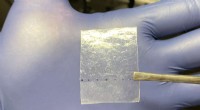
2. After filtration and washing, the calcium carbonate residue is obtained as a solid, white powder.
3. Upon adding hydrochloric acid to the dry calcium carbonate, effervescence occurs due to the release of carbon dioxide gas. This confirms the presence of carbonate ions in the original solution.
4. The final product is calcium chloride solution, as calcium carbonate has been converted into calcium chloride by reacting with hydrochloric acid.