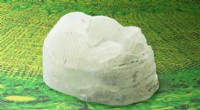
1. Oxygen: Boron reacts with oxygen to form boron oxide (B2O3). Boron oxide is a white, solid compound that is used as a flux in metallurgy, a component of some types of glass and ceramics, and as a desiccant.
2. Hydrogen: Boron reacts with hydrogen to form boron hydrides. Boron hydrides are colorless, gaseous compounds that are highly reactive and flammable. They are important sources of boron in various industrial processes.
3. Halogens: Boron reacts with halogens (fluorine, chlorine, bromine, iodine) to form boron halides. Boron halides are colorless or white, volatile compounds that are used as catalysts in organic synthesis, as Lewis acids, and as starting materials for the synthesis of other boron compounds.
4. Metals: Boron can react with certain metals to form borides. Borides are hard, refractory compounds that have high melting points and are often used in high-temperature applications, such as in cutting tools, crucibles, and electronic devices.
5. Nitrogen: Boron reacts with nitrogen to form boron nitride (BN). Boron nitride is a white, crystalline solid that is similar in structure to carbon graphite. It is an excellent thermal conductor and electrical insulator, and it is used in various high-temperature applications, such as crucibles, insulators, and lubricants.
6. Carbon: Boron reacts with carbon to form various boron carbides. Boron carbides are hard, refractory compounds that are used as abrasives, cutting tools, and in high-temperature applications.
These are some of the main substances that boron reacts with, but there are many other compounds and materials that boron can interact with under different conditions.