Metal Carbonate (MCO3) → Metal Oxide (MO) + Carbon Dioxide (CO2)
Here, M represents the metal present in the carbonate compound.
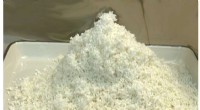
For example, when calcium carbonate (CaCO3), which is commonly known as limestone or chalk, is heated, it decomposes into calcium oxide (CaO) and carbon dioxide gas:
CaCO3 (calcium carbonate) → CaO (calcium oxide) + CO2 (carbon dioxide)
As the calcium carbonate is heated, the carbonate group (CO32-) breaks down, releasing carbon dioxide gas molecules. The remaining calcium ions (Ca2+) combine with oxygen ions (O2-) to form calcium oxide, a stable metal oxide compound.
This decomposition reaction is important in various industrial processes, such as the production of quicklime (calcium oxide) for construction materials, the reduction of metal ores to obtain metals, and the manufacturing of cement and glass. Understanding the decomposition behavior of metal carbonates is also essential in fields such as geology, metallurgy, and materials science.