1. Initial Contact:
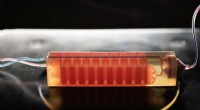
Upon pouring concentrated H2SO4 onto the copper plate, the acid comes into contact with the metal surface.
2. Oxidation:
The concentrated acid acts as an oxidizing agent and begins to oxidize the copper metal. Copper loses electrons, transforming into copper(II) ions (Cu2+).
3. Formation of Copper(II) Sulfate:
As the copper atoms undergo oxidation, they react with the sulfate ions (SO42-) present in the sulfuric acid to form copper(II) sulfate (CuSO4). This compound is soluble in water and dissociates into copper ions and sulfate ions.
4. Release of Sulfur Dioxide Gas:
During the reaction, sulfur dioxide gas (SO2) is produced as a byproduct. This gas has a distinct, pungent odor and can irritate the respiratory system. The evolution of SO2 gas can be observed as bubbles rising from the reaction site.
5. Hydration of Copper(II) Sulfate:
The copper(II) sulfate formed in the reaction is highly soluble in water. As the concentrated acid reacts with the copper plate, water molecules from the acid or the surroundings participate in hydration, forming hydrated copper(II) sulfate. This compound appears as bright blue crystals.
6. Evolution of Water Vapor:
The reaction between sulfuric acid and copper also leads to the release of water vapor. The high temperature generated during the reaction causes the water present in the acid or on the copper plate to vaporize. This can be observed as steam rising from the reaction area.
7. Further Reactions:
If the reaction is allowed to continue for an extended period, the concentrated sulfuric acid may begin to decompose, releasing additional gases such as sulfur trioxide (SO3) and oxygen (O2).
8. Copper Dissolution:
As the reaction progresses, the copper plate gradually dissolves in the concentrated sulfuric acid, forming a solution of copper(II) sulfate. The extent of dissolution depends on the concentration of the acid and the duration of the reaction.
It's important to note that this reaction should be carried out with caution, as concentrated sulfuric acid is highly corrosive and can cause severe burns. Proper safety precautions and protective equipment are essential when working with this acid.