- Temperature Control: Adjusting the temperature of the solution can influence the crystallization rate. Lowering the temperature generally increases the rate of crystallization, as the solubility of the solute decreases with decreasing temperature.
-Cooling Rate: Rapid cooling promotes faster crystallization. This can be achieved by using ice baths, cooling coils, or cryogenic methods to rapidly decrease the temperature of the solution.
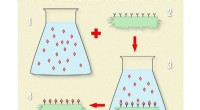
-Seeding: Introducing seed crystals into the solution can initiate and accelerate crystallization. Seed crystals provide a nucleation surface for the solute molecules to attach and grow, leading to faster crystal formation.
-Evaporation: Increasing the evaporation rate of the solvent can concentrate the solution and hasten crystallization. This can be achieved by exposing the solution to a warm environment, using a vacuum, or applying a gentle flow of air.
-Ultrasound: Applying ultrasonic waves can enhance crystallization by creating cavitation bubbles that act as nucleation sites for crystal growth.
-Stirring or Agitation: Gentle stirring or agitation can help distribute heat evenly and prevent the formation of concentration gradients within the solution, promoting uniform crystallization.
-Magnetic Fields: In some cases, applying magnetic fields can influence the crystallization process. Magnetic fields can alter the molecular interactions and induce crystallization.
-Additives: Adding specific additives or impurities to the solution can influence the crystallization behavior. Certain additives can act as crystal growth inhibitors or promoters, modifying the crystal size, shape, and growth rate.
-pH Adjustment: For solutions involving ionizable compounds, adjusting the pH can affect the solubility and crystallization properties.