Here's a step-by-step description of the process:
1. Decreasing temperature: As the temperature of a liquid decreases, the kinetic energy of it's molecules decreases as well. This means that the molecules move more slower and have less energy to overcome intermolecular forces.
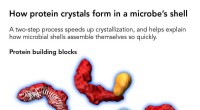
2. Formation of nucleation centers: At a cretin point, the temperature is low enough for some molecules to begin forming tiny clusters or "nucleation centers". These centers act as seeds for crystal growth.
3. Crystal growth: As more molecules lose energy and become attracted to the nucleation centers, they start to align and form regular patterns called crystals. The arrangements of the molecules in a solid are more orderly compared to a liquid.
4. Heat release: During the solidification process, heat, sometimes referred to as "latent heat of fusion", is released. The temperature remains constant at the freezing point until all the liquid has solidified.
5. Complete solidification: Once all the liquid has been converted into solid, the process is complete and the substance reaches a solid state.
It's worth noting that the freezing point of a liquid can be affected by various factors, such as pressure, impurities, and the rate of cooling. Some substance may undergo rapid freezing or supercooling, where they cool below their freezing point without solidifying until a disturbance or a "seed crystal" triggers crystallization.