A chemical bond is a lasting attraction between atoms, ions or molecules that enables the formation of chemical compounds. The type of chemical bond depends on the difference in electronegativity of the atoms involved and the electronic structure of the molecule as a whole.
There are three main types of chemical bonds: ionic, covalent, and metallic.
- Ionic bonds are formed when one or more electrons are transferred from one atom to another, creating oppositely charged ions. The attraction between these ions holds the compound together.
- Covalent bonds are formed when two or more atoms share one or more pairs of electrons. The shared electrons are held in a region of high electron density between the nuclei of the atoms.
- Metallic bonds are formed when the outermost electrons of metal atoms are delocalized, meaning they are not associated with any one atom but instead move freely throughout the entire metal lattice.
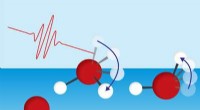
Hydrogen bonds are a type of intermolecular force, not a chemical bond. They are formed when a hydrogen atom covalently bonded to a highly electronegative atom (such as nitrogen, oxygen, or fluorine) interacts with another electronegative atom. This interaction creates a dipole-dipole attraction that holds the two molecules together.
So, the answer is hydrogen bonds.