CaCO3(s) + 2HCl(aq) → CaCl2(aq) + H2O(l) + CO2(g)
In this reaction, solid calcium carbonate reacts with hydrochloric acid to form calcium chloride, water, and carbon dioxide gas. Calcium chloride is an aqueous solution, water is a liquid, and carbon dioxide is a gas.
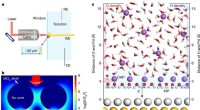
During the reaction, the hydrochloric acid breaks down the calcium carbonate into its constituent ions, calcium (Ca2+) and carbonate (CO32-). The calcium ions react with the chloride ions from the hydrochloric acid to form calcium chloride (CaCl2), which dissolves in the water to form an aqueous solution.
Simultaneously, the carbonate ions react with the hydrogen ions (H+) from the hydrochloric acid to form water (H2O) and carbon dioxide (CO2). The water remains as a liquid, while the carbon dioxide gas escapes into the atmosphere.
The reaction between eggshell and hydrochloric acid results in the dissolution of the calcium carbonate, ultimately leading to the degradation and softening of the eggshell. This reaction is commonly observed when eggshells are placed in vinegar, which contains acetic acid (CH3COOH), undergoing a similar chemical process.