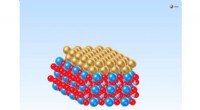
1. Atomic radius generally decreases across a period (row) from left to right. This is because the number of protons in the nucleus increases across a period, which increases the electrostatic attraction between the positively charged nucleus and the negatively charged electrons. As a result, the electrons are pulled closer to the nucleus, resulting in a decrease in atomic radius.
2. Atomic radius generally increases down a group (column) from top to bottom. This is because new electron shells are added as you go down a group, and each new shell is larger than the previous one. The outermost electrons in the atom are located in the outermost shell, and they are the most loosely held. As a result, they experience less electrostatic attraction from the nucleus, which allows them to be further from the nucleus. This results in an increase in atomic radius.
3. Atomic size of metals is generally larger than that of nonmetals. This is because metals have a lower electronegativity than nonmetals. Electronegativity is a measure of an atom's ability to attract electrons. The more electronegative an atom is, the more it attracts electrons. Metals have a lower electronegativity than nonmetals, so they attract electrons less strongly. As a result, the valence electrons in metals are more loosely held and can be more easily removed from the atom. This results in a larger atomic radius for metals.
4. Atomic size of noble gases is generally the largest in a period. This is because noble gases have a complete outermost electron shell. A complete outermost electron shell means that the noble gas has a very low electronegativity and does not attract electrons very strongly. As a result, the valence electrons in noble gases are very loosely held and can be easily removed from the atom. This results in the largest atomic radius for noble gases.
These are the general trends for atomic size among the elements. However, there are some exceptions to these trends, such as the lanthanide and actinide series.