1. Definite Shape and Volume: Solids have a definite shape and volume. Their particles are tightly packed and strongly bonded, forming a rigid structure that resists changes in shape or volume. In contrast, liquids take the shape of the container they are in and have a definite volume but no definite shape. Their particles are less tightly packed and can move more freely, allowing liquids to flow and adapt to the shape of their container.
2. Intermolecular Forces: The strength of intermolecular forces between particles is a crucial factor distinguishing solids from liquids. In solids, the particles are held together by strong intermolecular forces such as covalent bonds, ionic bonds, or metallic bonds. These forces keep the particles fixed in their positions, resulting in a rigid structure. In liquids, the intermolecular forces are weaker, such as van der Waals forces or hydrogen bonds. These weaker forces allow the particles to move more freely, giving liquids their fluidity.
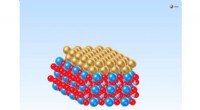
3. Particle Arrangement: The arrangement of particles in solids and liquids differs significantly. In solids, particles are arranged in a regular, ordered pattern, often forming a crystalline structure. The particles in liquids, on the other hand, are arranged randomly and do not have a fixed pattern. This difference in particle arrangement contributes to the distinct properties of solids and liquids.
4. Density: Solids are generally denser than liquids. Density is defined as the mass per unit volume. In solids, the tightly packed particles occupy a smaller volume, resulting in a higher density. Liquids, with their less densely packed particles, have a lower density compared to most solids.
5. Compressibility: Solids are less compressible than liquids. Compressibility refers to the ability of a substance to reduce its volume when pressure is applied. Solids have strong intermolecular forces that resist compression, making them difficult to compress. Liquids, with their weaker intermolecular forces, are more compressible and can be easily compressed when pressure is applied.
6. Diffusion: Diffusion is the movement of particles from an area of higher concentration to an area of lower concentration. In solids, the strong intermolecular forces restrict the movement of particles, resulting in a slow diffusion rate. Liquids have a higher diffusion rate due to the weaker intermolecular forces and the ability of particles to move more freely.
7. Melting and Freezing: Solids can be melted into liquids by applying heat. This process involves breaking the intermolecular forces holding the particles together. Conversely, liquids can be transformed into solids by removing heat, which causes the particles to lose kinetic energy and become more closely packed, leading to the formation of a solid structure.
Understanding these differences between solids and liquids is crucial in various scientific disciplines and practical applications. By manipulating intermolecular forces and temperature, it becomes possible to control and modify the properties of materials for desired purposes.