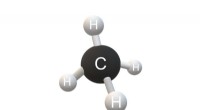
Covalent bonding occurs when two or more atoms share electrons in order to complete their electron shells. In a covalent bond, the atoms are held together by the force of the shared electrons.
Ionic bonding occurs when one atom donates electrons to another atom, creating a positive ion and a negative ion. The positive and negative ions are then held together by the force of their opposite charges.
Metallic bonding occurs in metals, where the outer shell electrons of the metal atoms are not held tightly to the nucleus. These freely moving electrons form a "sea" of electrons that surrounds the metal atoms and holds them together.
Chemical bonding is responsible for the formation of molecules and compounds. Molecules are composed of two or more atoms that are held together by chemical bonds. Compounds are substances that are composed of two or more elements that are chemically combined.