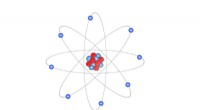
1. Composition: Ammonia is composed of nitrogen (N) and hydrogen (H) atoms. It contains one nitrogen atom and three hydrogen atoms.
2. Molecular Structure: Ammonia has a trigonal pyramidal molecular structure. The nitrogen atom is at the center, and the three hydrogen atoms are arranged in a triangular pyramid around it.
3. Bonding: The nitrogen and hydrogen atoms in ammonia are held together by covalent bonds. Each hydrogen atom shares its single electron with the nitrogen atom, forming a stable molecule.
4. Polarity: Ammonia is a polar molecule. This means that the distribution of electrons in the molecule is uneven, resulting in a partial positive charge on the hydrogen atoms and a partial negative charge on the nitrogen atom. This polarity gives ammonia its characteristic properties, such as its ability to dissolve in water and its basic nature.
5. Basicity: Ammonia is a weak base. It can react with water to form ammonium hydroxide (NH4OH), which is a stronger base. The basicity of ammonia is due to the presence of the lone pair of electrons on the nitrogen atom, which can accept a proton (H+) from water.
Overall, the formula NH3 provides information about the composition, molecular structure, bonding, polarity, and basicity of ammonia.