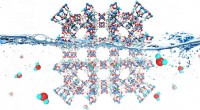
1. Polarity: Ammonia (NH3) is a polar molecule, meaning it has a positive end (the nitrogen atom) and a negative end (the hydrogen atoms). Water is also a polar molecule, with a positive end (the hydrogen atoms) and a negative end (the oxygen atom). This polarity allows ammonia molecules to form strong hydrogen bonds with water molecules. Hydrogen bonding is a type of intermolecular force that occurs when a hydrogen atom covalently bonded to a highly electronegative atom (such as nitrogen, oxygen, or fluorine) is attracted to an electronegative atom in another molecule. In the case of ammonia and water, the hydrogen atoms of ammonia are attracted to the oxygen atom of water, and the nitrogen atom of ammonia is attracted to the hydrogen atoms of water.
2. Dipole-Dipole Interactions: In addition to hydrogen bonding, ammonia and water molecules also experience dipole-dipole interactions. Dipole-dipole interactions are intermolecular forces that occur between polar molecules. The positive end of one molecule is attracted to the negative end of another molecule, and vice versa. These dipole-dipole interactions contribute to the solubility of ammonia in water.
3. Ionization of Ammonia: A small percentage of ammonia molecules in water undergo ionization, forming ammonium ions (NH4+) and hydroxide ions (OH-). This ionization process is facilitated by the high dielectric constant of water, which is a measure of its ability to reduce the electrostatic forces between ions. The formation of ions further enhances the solubility of ammonia in water.
The combination of hydrogen bonding, dipole-dipole interactions, and ionization makes ammonia highly soluble in water.