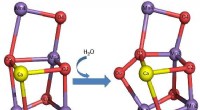
During a phase change, the chemical composition of the substance does not change. For example, when water freezes, the molecules of water are still composed of two hydrogen atoms and one oxygen atom, but they are arranged in a different crystalline structure. In a chemical reaction, the chemical bonds between atoms are broken and new bonds are formed, resulting in the formation of new chemical substances. For example, when hydrogen gas and oxygen gas react to form water, the hydrogen and oxygen molecules are broken down and new water molecules are formed.
Therefore, a phase change is not a chemical reaction because it does not involve a change in the chemical composition of the substance.