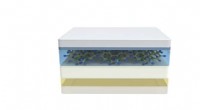
To illustrate, let's consider a simple solution of sugar dissolved in water. In a dilute sugar solution, there would be a small amount of sugar dissolved in a large amount of water. In a concentrated sugar solution, there would be a large amount of sugar dissolved in a small amount of water.
The concentration of a solution can be expressed in several ways, including:
- Mass/mass percent: This is the mass of solute per 100 grams of solution.
- Mass/volume percent: This is the mass of solute per 100 milliliters of solution.
- Molarity: This is the number of moles of solute per liter of solution.
- Parts per million (ppm): This is the number of parts of solute per million parts of solution.
- Parts per billion (ppb): This is the number of parts of solute per billion parts of solution.
The choice of concentration unit depends on the specific application. For example, mass/mass percent is commonly used for solid-liquid solutions, while mass/volume percent is commonly used for liquid-liquid solutions. Molarity is often used for solutions used in chemical reactions, while ppm and ppb are often used for very dilute solutions.