1. Molecular Design:
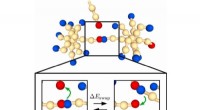
Scientists start by designing molecules with specific shapes, functional groups, and binding properties that enable them to rotate. These molecules can be composed of organic compounds, inorganic materials, or hybrid structures. The design process often involves computational modeling and simulations.
2. Self-Assembly:
Many molecular rotatory machines are created through self-assembly, a process in which molecules spontaneously arrange themselves into larger, functional structures. Scientists design molecules with specific interactions (e.g., hydrogen bonding, electrostatic interactions, or van der Waals forces) that guide their self-assembly into rotatable structures.
3. Template-Directed Synthesis:
In some cases, scientists use templates to direct the synthesis and organization of molecular rotatory machines. Templates can be surfaces, scaffolds, or pre-assembled structures that control the molecular arrangement and facilitate the formation of rotatory components.
4. Chemical Fueling:
To power the rotation, scientists provide the molecular machine with chemical fuel. This fuel can be a specific molecule or a chemical reaction that generates energy. The energy released by the chemical reaction drives the conformational changes or movements necessary for rotation.
5. Molecular Motors:
Molecular motors are a type of rotatory machine that converts chemical energy into mechanical motion. They consist of a rotor, a stator, and a fuel source. The rotor is the rotating part, while the stator provides the fixed framework. The fuel provides the energy for the rotation.
6. Molecular Switches and Gates:
Molecular rotatory machines can also be designed to act as switches or gates. They can control the flow of molecules, ions, or electrons by regulating their rotation or conformational changes. This enables the development of molecular-scale electronic devices and circuits.
7. Characterization and Analysis:
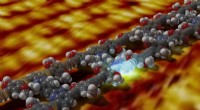
Scientists employ various techniques to characterize and analyze the performance of molecular rotatory machines. These techniques include atomic force microscopy (AFM), scanning tunneling microscopy (STM), single-molecule spectroscopy, and X-ray crystallography.
Building rotatory machines at the molecular level requires precise molecular design, control over self-assembly processes, and the ability to harness chemical energy. As scientists continue to advance their understanding and capabilities in this field, molecular machines hold great promise for applications in nanotechnology, drug delivery, sensing, and energy conversion.